
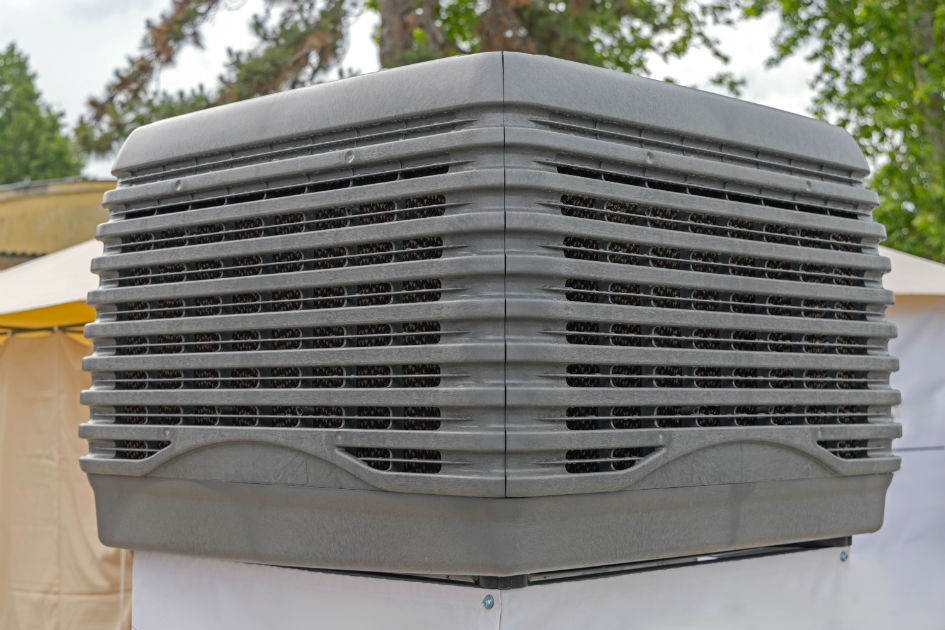



What type of air conditioning does your place have? A lot of people answer ‘ducted’ without thinking or knowing that much about whether their ducted setup is evaporative or reverse cycle. What is evaporative cooling in a house, exactly? That’s what we’re going to zoom in on today.
What is evaporative cooling?
Think of evaporative cooling as a bit like the way your body is designed. You know how when you sweat, that sweat is designed to cool your skin and reduce your body temperature? That’s basically how evaporative works in the air conditioning world, too.
Evaporating water succeeds in pulling heat out of the air around it – and an evaporative cooling system is really just a way of putting that everyday bit of physics to work on a much larger scale. Namely, it manages to cool an entire house rather than a single patch of skin.
It’s quite a different approach to cooling compared to a standard air conditioner – and understanding exactly how it works helps to explain both why people like it and where it can fall a little short, too.
What is the evaporative cooling process?
An evaporative cooling system draws warm air from outside through pads soaked in water – and the evaporation happening on those pads takes heat out of the air before it’s pushed into your home. So: what is an evaporative cooling system in the most practical of terms?
It means:
- No refrigerant
- No compressor.
And:
- Just water
- Airflow
- And a fan.
Simple, right?
The evaporative cooling process – Step by step
Here’s what’s happening inside the unit while it’s running:
1. Air comes in
Warm air from outside is drawn into the unit through an intake vent, usually mounted on the roof.
2. Air meets water
That air passes through cooling pads that are kept constantly wet by a small water pump and reservoir inside the unit.
3. Heat is pulled out
As the water on the pads evaporates, it draws heat energy out of the passing air, cooling it down in the process.
4. Cool air goes in
A fan pushes this now-cooled, slightly more humid air through ductwork or vents and into the rooms of your home.
5. Warm air goes out
For the system to keep working, warm indoor air needs somewhere to go, so windows or doors are left slightly open to let it escape.
6. The cycle repeats
The unit keeps drawing in warm air and pushing out cool air continuously, for as long as it’s switched on.
What is ducted evaporative cooling?
When you hear about a modern evaporative cooling system, it’s almost always ducted – meaning a central roof-mounted unit feeding cooled air through a maze of ducting to the vents in each significant room of your house.
It’s a whole-house approach rather than room-by-room cooling – and it’s why a single unit can comfortably manage a large home without needing a separate system in every room the way some other cooling types do. The vents are usually then fitted with simple adjustable dampers so you can direct more airflow to whichever rooms are being used most on a given day.
What is the disadvantage of evaporative cooling?
Every cooling method has a weak point – and for this one it comes down to the moisture that is already in the air. Otherwise known as humidity – which is the enemy of evaporative cooling.
What humidity is too high for evaporative cooling? To be honest, the cooling effect will start to drop off somewhat past about 50 to 60% relative humidity, since the air’s already carrying enough moisture that it can’t absorb much more from the cooling pads. Above that point, you’ll notice the unit working but the cooling effect becoming noticeably weaker, and on seriously humid days it can feel like it’s not working well enough. In fact, it adds a bit of humidity to the air it cools as well.
It’s also worth knowing that evaporative systems only cool – they can’t heat like a reverse cycle can. So homes wanting both usually pair one with a separate heating solution or choose a reverse cycle system instead.
Getting the best results from it
As for the big upside, that one’s really simple: Cost.
Evaporative systems are generally cheaper to install than a comparable ducted reverse cycle setup, and they’re a lot cheaper to run too – since a fan and a water pump draw a lot less power than a compressor working to compress and circulate refrigerant. That cost advantage is a big part of why people choose evaporative cooling in the first place.
So, what is the best way to use evaporative cooling once you’ve got a system installed?:
- Keep a window or door cracked open somewhere in the house whenever it’s running, since the whole process depends on warm air having somewhere to escape to.
- Run it during the hottest, driest part of the day rather than overnight when humidity often climbs.
- Keep the cooling pads clean and free of mineral buildup, since pads clogged with scale can’t hold water evenly and lose effectiveness over time.
- A yearly service before the weather heats up also picks up on wear before it turns into a bigger issue mid-summer, and it’s a lot cheaper than dealing with a breakdown on the first searingly hot day of the season.
Is evaporative right for your home?
Evaporative cooling suits a reasonably dry climate and a household that doesn’t mind windows staying open while it runs. It’s efficient, it uses far less power than a standard air conditioner, and it generally does a great job in the right conditions.
But when humidity is soaring or you simply want a sealed-up house cooled without opening anything, a reverse cycle system is usually the better fit instead.
Not really sure which option suits your home and your preferences? Fluid Air Conditioning can talk you through it properly – so get in touch, and we’ll help you work out what’s exactly right for your place.