
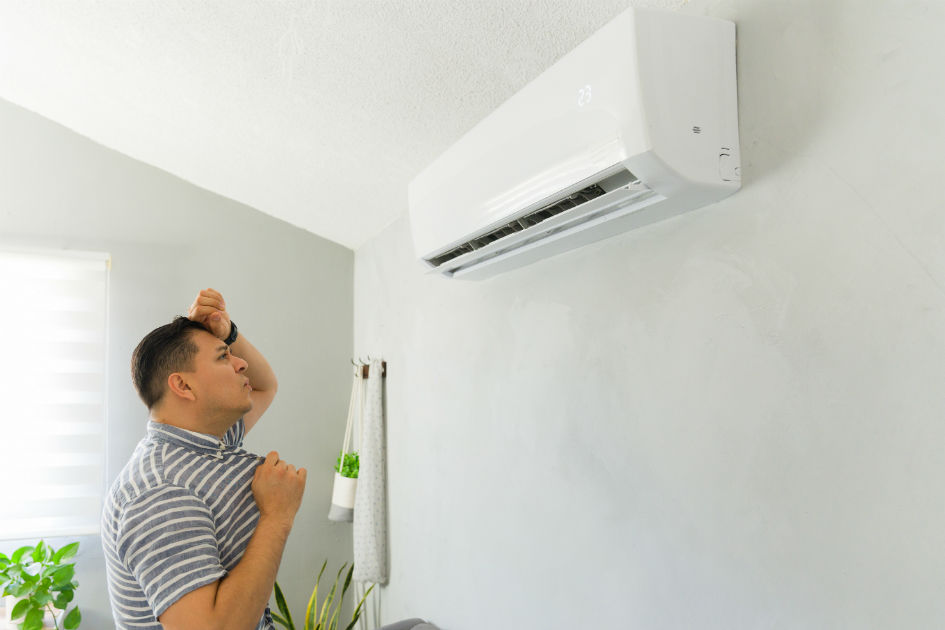



So, you’ve switched on the air conditioner as usual, waited for the room to cool down or warm up, and … nothing much happens. Is your air conditioner not working?
Maybe the unit just won’t start at all. Maybe the fan is running but the air is not changing temperature. Maybe the remote seems dead. Or maybe the cooling works perfectly, but you have the air conditioner heat mode not working right.
Before assuming the system needs a major repair, there are a few basic checks worth doing. Because while some air conditioning problems need a licensed technician, some are actually quite simple.
The trick is working through the likely causes in the right order.
First, what type of air conditioner do you have?
The only place to start, though, is by identifying the system you’re dealing with.
Most homes use either:
- A split system, with an indoor wall unit connected to an outdoor unit
- Or a ducted air conditioning system that distributes air through vents around the home.
The difference is fundamental, making the troubleshooting steps very different.
For example, a split system problem may be limited to one indoor unit, while a ducted system may have issues with zones, controls or airflow through multiple rooms.
Do you know what air conditioner type you’re dealing with? When you’re ready, work through the following checks.
Air conditioner not working? 7 Things to check:
Start with the simplest possibilities first, then work through the checks below before deciding whether the system needs professional attention.
1. Check the power
Start with the obvious.
- Is the unit switched on?
- Do other appliances in the home have power?
For split systems, also check the isolator switch near the outdoor unit if one is fitted.
If the air conditioner has tripped a circuit breaker, do not keep resetting it repeatedly. A breaker that keeps tripping can indicate an electrical fault that needs professional attention.
2. Check the remote control
Could it be the air conditioner remote control not working?
If the system will not respond, the air conditioner remote may be the problem rather than the air conditioner itself.
Try:
- Replacing the batteries
- Checking that the display is working
- Making sure nothing is blocking the signal
- Standing closer to the indoor unit
- Confirming the correct operating mode is selected.
Some systems may also have a manual power button on the indoor unit, which can help you work out whether the remote is actually the issue.
3. Check the mode and temperature setting
This catches out more people than you might expect:
Make sure the system is actually set to the mode you want.
Looking for cooling mode? It’s usually shown with a snowflake symbol. As for heating, look for the sun symbol.
If you’re pretty sure you have an air conditioner heat mode not working, check that the set temperature is higher than the current room temperature. Yes, it sounds simple, but you’d be surprised how often people struggle with this.
For cooling, the set temperature needs to be lower.
Also check that the unit has not accidentally been left in fan-only or dehumidify mode.
4. Give heating mode a few minutes
Reverse-cycle air conditioners do not always start blowing warm air immediately.
When heating is selected, the system may delay the indoor fan while the unit warms up.
On colder days, the outdoor unit may also enter a defrost cycle. During this time, heating can temporarily pause while the system removes ice from the outdoor coil.
A short delay can therefore be normal.
But if your system simply never starts heating properly, there may be another problem.
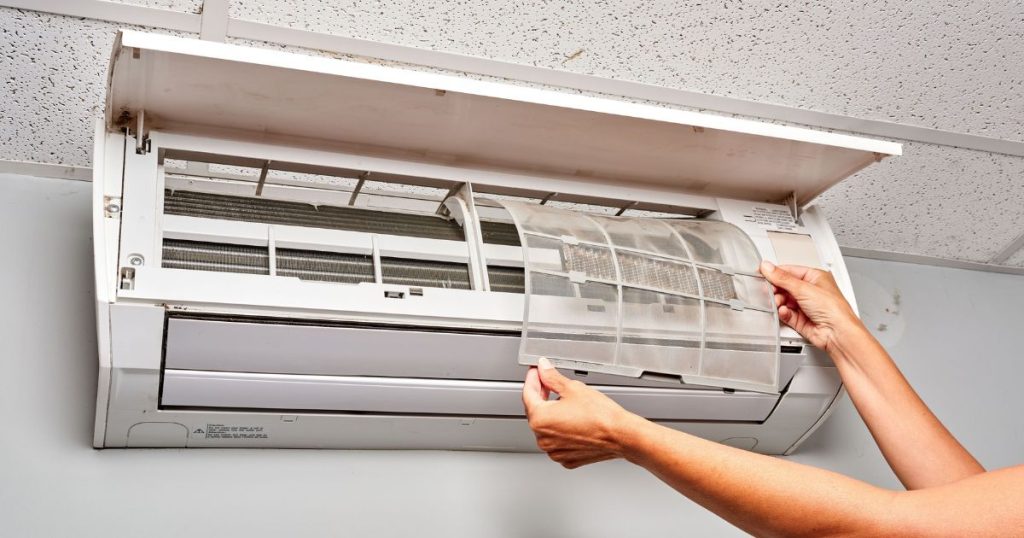
5. Check and clean the filters
Dirty filters are one of the simplest causes of poor air conditioning performance.
When filters become clogged with dust, airflow is restricted.
Have you noticed:
- Weak airflow?
- Poor cooling or heating?
- Longer run times?
- Higher energy use?
- Unusual smells?
Many split-system filters can be removed and cleaned, but always follow the manufacturer’s instructions for your particular unit.
If the filters are heavily contaminated or the system itself is dirty, professional servicing may be worthwhile.
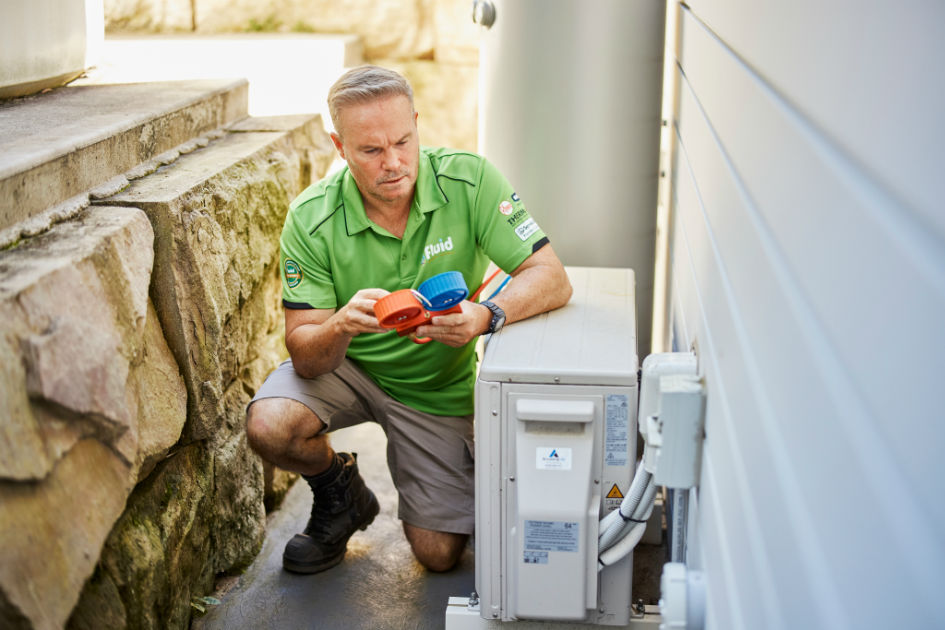
6. Check the outdoor unit
Take a quick look at the outdoor unit without opening or dismantling anything.
Are you seeing?
- Leaves?
- Plants?
- Boxes?
- Other objects that might be blocking the crucial airflow?
Always remember, the outdoor unit needs space to move air efficiently.
If it is making unusual noises, repeatedly stopping, leaking excessively or not operating at all while the indoor unit is running, the system may need inspection.
Do NOT attempt to open the unit or repair electrical or refrigerant components yourself.
7. Look at what the system is actually doing
By this stage, pay close attention to the symptoms.
Is the air conditioner:
- Completely unresponsive?
- Running but not cooling?
- Running but not heating?
- Blowing only weakly?
- Switching itself off?
- Making unusual noises?
- Displaying an error code?
- Leaking water indoors?
The answers to those questions can really help to narrow down the problem.
For example, an air conditioner that runs but produces little heating or cooling could have an:
Airflow problem: Restricted filters, blocked vents or other airflow issues can reduce heating and cooling performance.
Sensor fault: A faulty sensor can cause incorrect temperature readings or poor system control.
Refrigerant issue: Low refrigerant or a leak can stop the system from heating or cooling properly.
Outdoor unit problem: Faults with the outdoor unit can affect the whole system, even if the indoor unit still appears to run.
And a system that does not start at all may have a control, electrical or component fault.
When should you stop troubleshooting?
There is a point where continuing to poke around is unlikely to help.
Call an air conditioning technician if:
- The circuit breaker keeps tripping
- The system displays an error code
- Water is leaking indoors
- The unit makes grinding, banging or electrical noises
- Heating or cooling performance remains poor
- The outdoor unit is not operating correctly
- You suspect a refrigerant or electrical fault.
And always remember, air conditioning systems contain electrical components and refrigerant circuits – and that means they should never really be treated as DIY repair jobs.
My air conditioner is not working – What’s next?
Checked everything we recommended? Problem still there? The time has come to have your system properly assessed.
Fluid Air Conditioning provides air con repairs and servicing all across the Central Coast and Newcastle region for home split systems and ducted air conditioning. Our friendly team can diagnose heating, cooling, airflow, electrical and control problems and explain what is needed before work begins.
Air conditioner not working properly? Call Fluid Air Conditioning to arrange an inspection … ASAP.