



You switch the air conditioner on and something seems off. Is that a damp, musty smell you are noticing coming from the vents? Are those black specks around the louvres? Is that visible grime or spotting behind the front cover? If you’re nodding, that’s a very good reason to think a little deeper about potential mould in air conditioner units before simply wiping away what you can see.
We all know that an air conditioner naturally deals with moisture. That’s because warm air passes over a cold evaporator coil, creating condensation that then needs to drain away somewhere. Add in dust and restricted airflow or a system problem to our recipe, and you can end up with exactly the damp, nutrient-rich environment that mould absolutely thrives in.
Yes, it’s unpleasant. But more importantly, mould exposure can irritate the eyes, nose, throat and lungs. If you’re sensitive to this sort of thing, you can start to experience allergy-type symptoms – while mould can also trigger asthma symptoms in some people.
What about black mould?
If you suspect black mould in air conditioner components, that’s even more alarming. But don’t panic too much, because colour alone does not tell you how dangerous a mould is.
It’s important to note that ‘black mould’ is not one particular species. And even the mould commonly associated with the name – Stachybotrys chartarum, for those playing at home – should be treated in much the same way as other indoor mould:
If it’s growing where it should not be, deal with the moisture source and remove the mould. It’s just that simple. It’s not like there’s some kind of mould in air conditioner illness that people develop. Some people won’t have any noticeable reaction at all. Also possible is that the irritation, congestion, wheezing or worsening asthma you’re dealing with is definitely mould-related.
What causes mould in air conditioner systems?
Moisture is the common factor here – but there’s something else that helps it linger.
Common contributors include:
- Dirty filters
- Dust on internal surfaces
- A blocked or poorly draining condensate line
- Long periods of inactivity
- An indoor unit that remains damp after use.
Split systems
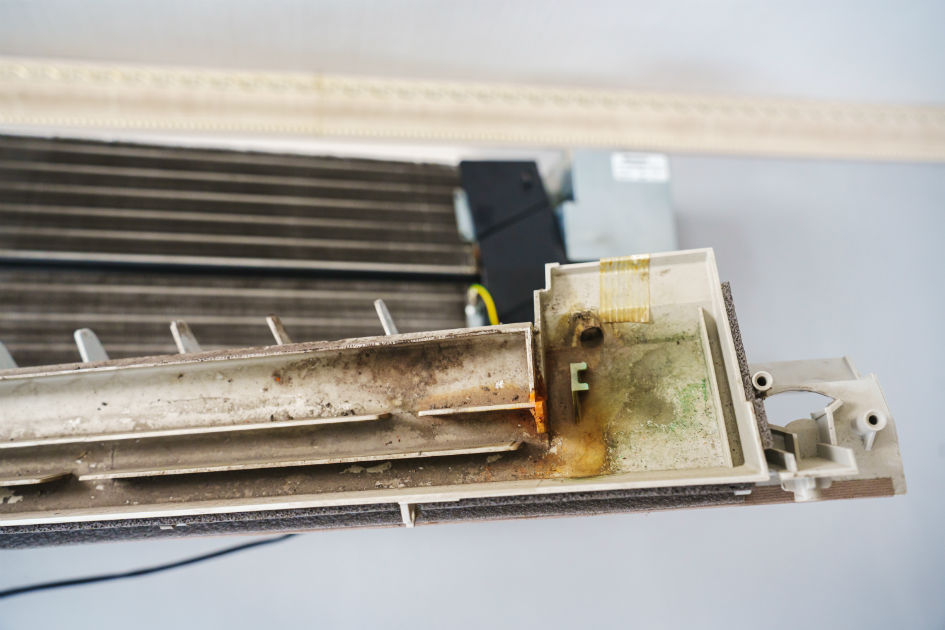
Are you noticing mould in split system air conditioner units? It’s probably not merely as deep as the marks on the front grille. The evaporator coil, drain pan and blower components all sit behind the parts you normally see – and they could be mould-rich too.
Evaporative systems
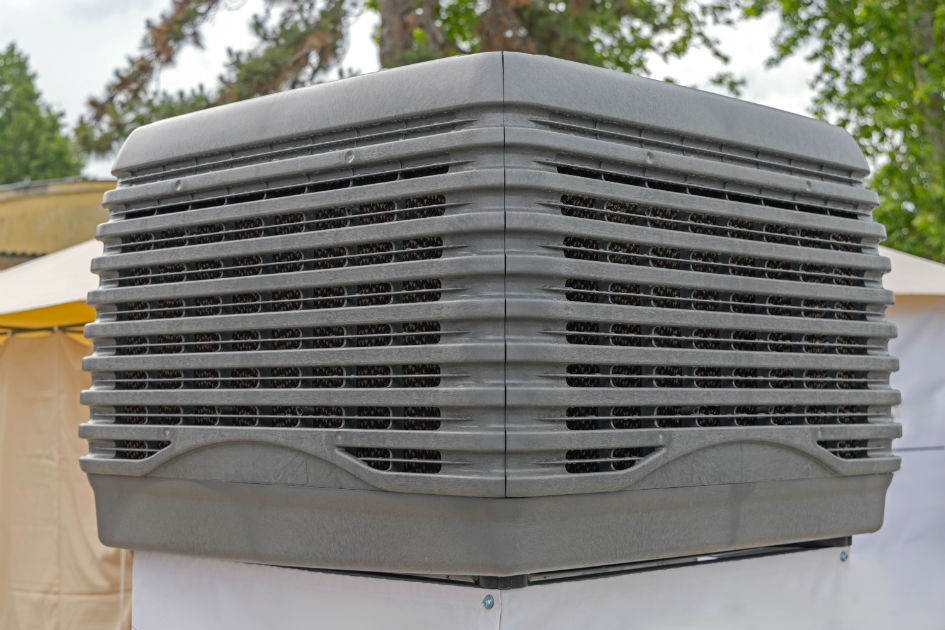
These ones work differently again. Because they deliberately use water, mould in evaporative air conditioner components can develop quite easily when the pads, trays or water pathways remain dirty or poorly maintained.
Ducted & reverse-cycle systems
Reverse-cycle systems can develop mould for the same basic reason as split systems: moisture sticks around the internal components where dust and organic matter can build up.
In ducted systems, the problem can also extend beyond the indoor unit itself, with mould or musty odours sometimes linked to return-air filters, drain pans, coils or sections of ductwork.
Safe first steps for cleaning air conditioner mould
So, what can you safely do yourself to deal with all this?
1. Turn the system off completely
Before cleaning anything, switch the air conditioner off.
If you are opening the indoor unit beyond normal filter access, isolate the power as directed by the manufacturer. Never clean around live electrical components.
Then open the front panel according to your unit’s manual.
If you immediately find extensive mould deep inside the unit, stop there. That has moved beyond a quick household filter clean.
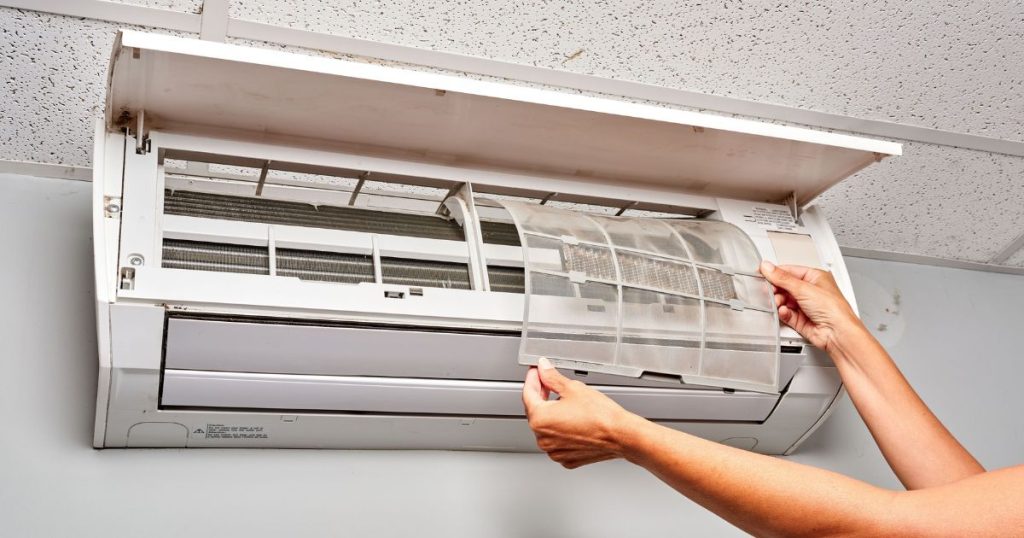
2. Remove & inspect the filters
Filters are the easiest place to start when working out how to clean mould in air conditioner units.
Take them out carefully and look at both sides.
If your filters are washable:
- Vacuum loose dust first.
- Wash them in lukewarm water.
- Use a mild detergent if the manufacturer allows it.
- Rinse thoroughly.
- Leave them to dry completely in the shade.
- Do not reinstall damp filters.
Manufacturers generally recommend regular filter cleaning because dirty filters restrict airflow and can contribute to odours and poor performance.
3. Clean the accessible surfaces
Filters removed? Closely inspect the front cover, louvres and other easily reachable plastic surfaces.
- Use a soft damp cloth and a mild cleaner suitable for the unit.
- Do not spray large amounts of cleaner directly inside the air conditioner.
- Resist the temptation to attack everything with bleach.
Remember, strong chemicals can damage components, and spraying chemicals onto coils, electronics or inaccessible internal surfaces is very different from wiping mould from a bathroom tile.
If you are trying to kill mould in air conditioner internals rather than simply clean accessible surfaces, that is usually the point where professional cleaning becomes the safer option.
4. Check the condensate drain
Bear in mind that your air conditioner removes water while it cools. And that water needs somewhere to go.
If the drain is restricted, water can remain inside the indoor unit or drain pan for longer than it should. That creates a recurring moisture problem, which means cleaning visible mould may only buy you a short break.
Look for the obvious warning signs:
- Water dripping from the indoor unit?
- Staining beneath it?
- Unusual moisture around the drain outlet?
Be aware: Do not dismantle the drainage system unless you know what you are doing!
5. Let everything dry properly
Mould control is ultimately moisture control.
Once the washable components have been cleaned, give them enough time to dry fully before putting the system back together.
Some modern air conditioners also have drying, fan-only or mould-prevention functions designed to reduce residual moisture after cooling. Check your manual to see what your particular model offers.
It’s a simple way to reduce the chance of the same problem returning.
6. Run the system and check again
Once everything is dry and correctly reassembled, run the air conditioner.
Pay particular attention to the smell.
Has that familiar musty odour come back immediately? Unfortunately, visible filter cleaning probably has not reached the source.
That is an important clue when figuring out how to get rid of mould in air conditioner systems properly. Because the mould may be sitting on the evaporator coil, the blower wheel, the drain pan – or another internal component that cannot be cleaned properly from the front of the unit.
When a DIY clean isn’t enough
There’s a big difference between washing a dusty filter with a few spots of mould and cleaning an air conditioner that is contaminated internally.
Consider calling a professional if:
- Mould returns quickly after cleaning.
- The smell remains when the system runs.
- You can see mould deeper inside the unit.
- Water is leaking from the indoor unit.
- Airflow has noticeably weakened.
- The system is overdue for a proper service.
When it’s time for a proper air conditioner clean
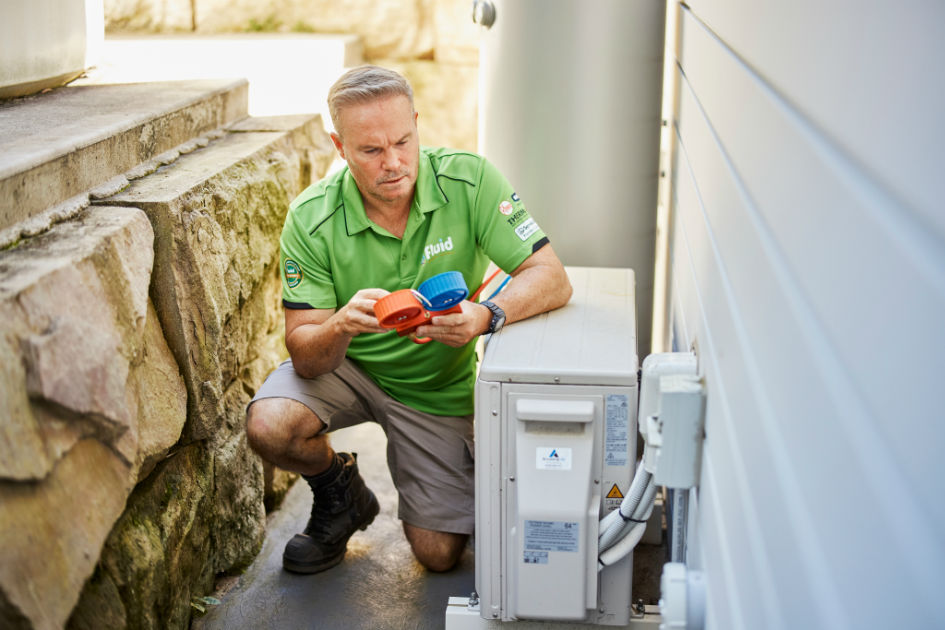
Fluid Air Conditioning can do what no DIY routine can even start to touch. We’ll open up the system properly, take a really good look at all the internal components, and clean the areas you cannot safely reach from the front panel.
We can also look for the reason the moisture is lingering in the first place. That may mean checking drainage or airflow, or the general condition of the system rather than just repeatedly wiping away the visible result.
Does your air conditioner look clean from the outside but still smells like something damp is hiding inside it? There is a fair chance your nose is right! Call Fluid Air Conditioning and let us take a proper look.